
Specifics of computer science sub-disciplines in RDM: NFDIxCS at the GI Presidium meeting
From January 30 to 31, the 14 technical committees of the German Informatics Society gathered at the GI Presidium meeting. On this occasion, the GI Presidium working group NFDI invited the participating experts to an NFDIxCS Open Space. Expectations for joint services, infrastructures and opportunities for community engagement were discussed in an open exchange format.
For the first time this year, the spokepersons of the technical committees, representing the variety of computer science subdisciplines, and members of the Presidium of the German Informatics Society met in Siegburg. Not only the stunning view from the Catholic Social Institute offered an exciting perspective, but also the rich program with various reports, including current developments of NFDIxCS. With some services now established (e.g. communication measures) and other central services on an accelerated path (e.g. Research Data Management Container), the inclusion of perspectives and expectations of each computer science subdiscipline for these services is particularly valuable, said NFDIxCS spokesperson Michael Goedicke. This is to ensure that all NFDIxCS services meet with a high level of acceptance in the various sub-disciplines of computer science and that there is a willingness to use and further develop the services together in the long term.
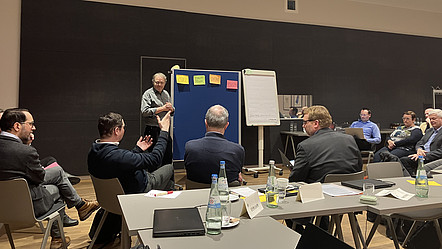
To gather these perspectives, spokesperson Michael Goedicke and co-spokesperson Ulrike Lucke initiated an open space session in the afternoon. Here, the participants discussed the following key questions: What are the particular requirements of the subdisciplines with regard to RDM? And: What expectations do they have of the NFDIxCS services?It was repeatedly emphasized that central and long-term available services and infrastructures for storing and managing data are essential. All too often, data is lost due to a lack of central storage points. In order to use these infrastructures effectively, it is also crucial to develop guidelines and create clear specifications for security aspects, e.g. access rights. The development of duplicate structures should also be avoided at all costs. Instead, department-specific services and common infrastructures must be created, which should be accompanied by specific organizational structures (e.g. metadata standards) on the one hand and community-oriented communication measures on the other.
NFDIxCS is looking forward to continuing the exchange with the representatives and working together on practical use cases that bring together the needs of the subdisciplines with the NFDIxCS services.