
NFDIxCS at the NFDI4DS Conference 2024
The NFDI4DataScience (NFDI4DS) Conference, held on October 25 at the Weizenbaum Institute in Berlin, presented a well-structured program focused on updates from the consortium’s various Task Areas and collaborations with related initiatives.
The event began with an overview of NFDI4DS’s objectives and approaches, followed by presentations from representatives of each Task Area. These sessions showcased efforts to build a national research data infrastructure (NFDI) specifically designed to support the Data Science and AI communities in Germany, addressing both technical requirements, challenges and community growth.
Each Task Area (TA) targets specific objectives: TA1 concentrates on fostering a robust Data Science community by offering training, webinars, and events to support skill development and networking, alongside addressing legal and ethical concerns. TA2 focuses on enhancing access to research data and knowledge graphs, facilitating the availability of datasets and models for Data Science. TA3 is concerned with services for aggregating information from diverse data sources, improving accessibility to relevant resources across various platforms. TA4 explores application and technology transfer across disciplines such as language technology, biomedical research, and social sciences. “Deep Dive” sessions allowed participants to explore specific challenges, ongoing projects, and current solutions within each Task Area in greater detail.
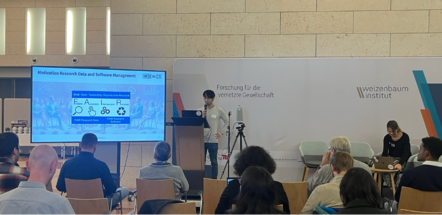
The ‘Collaborator’ section that followed aimed at strengthening exchanges between research communities. This session emphasized collaboration, community interaction, and shared resources to advance open, interdisciplinary research. Anh Duc Vu from NFDIxCS presented the NFDIxCS consortium, highlighting research on implementing FAIR Data Principles for informatics data and software, and introducing the Research Data Management Container (RDMC), a key tool for advancing future data management efforts. Additionally, further initiatives like OpenAIRE – an infrastructure designed to support open science by providing digital tools for open access to research outputs – illustrate potential pathways for collaboration at the European level. This example is particularly relevant for all NFDI consortia, as it highlights how the scientific community could work together to promote open science and data accessibility across national boundaries, advancing the shared goals of the NFDI initiative.