
INFORMATIK Festival 2026: Digital Resilience and the Importance of Research Data Infrastructures
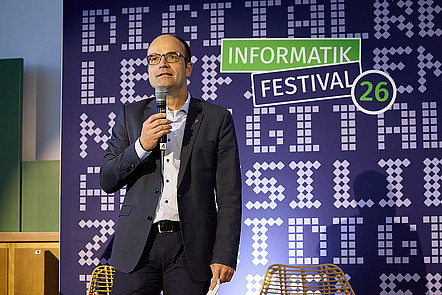
At the INFORMATIK Festival 2026 in Dresden, TU Dresden Vice-Rector Prof. Dr. Lars Bernard highlighted the importance of the National Research Data Infrastructure (NFDI) for strengthening research, scientific collaboration, and digital resilience.
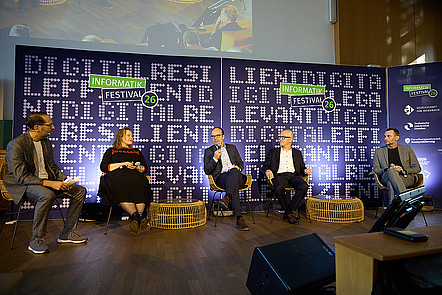
The INFORMATIK Festival 2026, the 56th annual conference of the German Informatics Society (GI), brought the computer science community together in Dresden to discuss one of the most pressing challenges of our time: Digital Resilience. With more than 40 workshops and sessions, the festival provided a platform for exchange between researchers, practitioners, policymakers, and international guests.
The programme addressed a broad spectrum of topics, ranging from trustworthy digital infrastructures and cybersecurity to artificial intelligence, digital sovereignty, and the future of computer science research and education.
Research Data Infrastructures as a Foundation for Digital Resilience
In his welcome address, Prof. Dr. Lars Bernard, Vice-Rector of TU Dresden, emphasised the importance of sustainable digital research infrastructures for the scientific community. Bernard is also actively involved in the German National Research Data Infrastructure (NFDI) initiative as a spokesperson for Base4NFDI and NFDI4Earth, two initiatives dedicated to strengthening research data management and cross-disciplinary collaboration.
His remarks highlighted the central role of the NFDI in making research data accessible, interoperable, and reusable across institutional and disciplinary boundaries. By establishing shared standards, services, and infrastructures, the NFDI contributes to the long-term availability of scientific knowledge and strengthens the resilience of the German research system.
In an increasingly interconnected and data-intensive research landscape, sustainable research data management is not merely a technical requirement. It is a prerequisite for scientific reproducibility, innovation, international cooperation, and the ability of research communities to respond to technological and societal challenges.
For NFDIxCS, these perspectives are particularly relevant. As the NFDI consortium for and with Computer Science, NFDIxCS contributes to the development of research data and software management services that support FAIR principles, reproducibility, and the sustainable preservation and reuse of scientific results.
Connecting Computer Science, Research Infrastructures, and International Communities
The INFORMATIK Festival 2026 also offered numerous opportunities to strengthen connections between the computer science community and national and international research infrastructures.
Alongside the main conference programme, the festival hosted several integrated events, including the 4th NFDIxCS Symposium “RDM From Research to Sustainable Services” and the General Assembly of the International Federation for Information Processing (IFIP).
These events highlighted the importance of collaboration across disciplinary, institutional, and national boundaries. In particular, the exchange between the NFDI community and international computer science societies offered valuable opportunities to discuss common challenges in research data management, open science, and the sustainable operation of digital services.
Building a Resilient Digital Research Ecosystem
The discussions in Dresden demonstrated that digital resilience requires more than secure technologies. It also depends on reliable research infrastructures, open standards, long-term access to data and software, and strong scientific communities.
The NFDI initiative, with its disciplinary consortia and cross-cutting infrastructure projects, plays an essential role in creating these foundations.
NFDIxCS welcomes the strong emphasis placed on research data infrastructures at the INFORMATIK Festival 2026 and looks forward to continuing its collaboration with the NFDI community, the German Informatics Society, and international partners to advance sustainable, interoperable, and trustworthy research data and software services.