
4th NFDIxCS Symposium: Advancing Research Data Management Towards Sustainable Services in Dresden
A successful symposium in Dresden brought together international researchers and infrastructure experts to discuss the future of sustainable research data and software management in computer science.
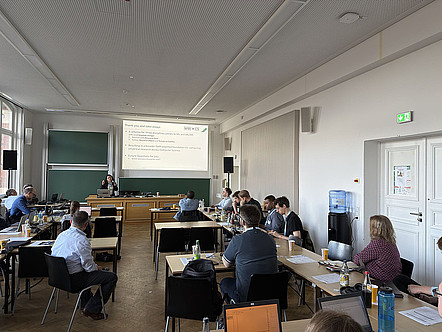
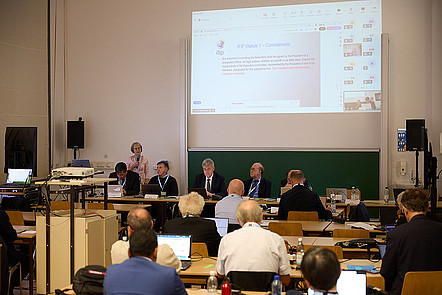
On 22 September 2026, the 4th NFDIxCS international Symposium, “RDM From Research to Sustainable Services,” took place at TU Dresden as part of the INFORMATIK Festival 2026, the annual conference of the German Informatics Society (Gesellschaft für Informatik, GI). The symposium provided a platform for scientific exchange on how innovative research data management (RDM) approaches can evolve into reliable, interoperable, and sustainable services for the computer science community.
Organised within the framework of the NFDIxCS, the event brought together perspectives on open science, FAIR research data, software preservation, and the integration of research workflows into digital infrastructures.
Highlights from the Programme
The symposium opened with a European perspective on Open Science, presented by Dr. Simone Rehm (CIO University of Stuttgart). Her contribution placed research data management in the broader context of European cooperation and the development of an open and interconnected research ecosystem.
A practical perspective followed with Holger Angenent (University of Münster) and his presentation on Integrating RDM Workflows into Nextcloud, exploring opportunities to embed research data management into established collaboration environments and everyday scientific workflows.
Further contributions addressed key technological challenges and developments:
Andrea Maldonado / Technical University Munich) presented A-Posteriori Joint Schema Expansion for Empirical Research Knowledge in Computer Science, addressing approaches to structuring and connecting research knowledge.
Lars Florian Meiendresch (University of Duisburg-Essen) discussed Advancing FAIR Software Archival: The German Software Heritage Mirror and SpecHash Integration, highlighting developments supporting the long-term preservation, identification, and reuse of research software.
Dr. Firas Al Laban (University of Potsdam, NFDIxCS) explored National Research Data and Software Management Towards International Engagement: Artifact Evaluation Use Case, connecting national infrastructure developments with international collaboration and scientific quality assurance.
Together, the presentations illustrated the broad spectrum of challenges involved in making research outputs findable, accessible, interoperable, and reusable while ensuring their long-term availability.
Strengthening International Collaboration with IFIP
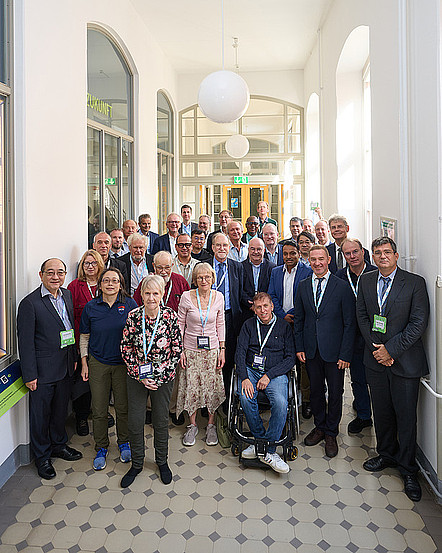
This year's symposium also addressed the international computer science community, particularly members and delegates of the International Federation for Information Processing (IFIP), which held its General Assembly in Dresden in conjunction with the INFORMATIK Festival 2026. Bringing together representatives of national computer science societies from around the world, the IFIP General Assembly provided an excellent opportunity to connect NFDIxCS activities with international perspectives on research data management, open science, and sustainable digital research infrastructures. By welcoming the IFIP community, the symposium sought to foster dialogue beyond national boundaries, identify opportunities for international cooperation, and contribute to the development of interoperable research data and software management services that can serve the global computer science community.
From Research Results to Sustainable Infrastructure
A central theme throughout the symposium was the transition from research-driven concepts and prototypes to sustainable, community-oriented services.
For NFDIxCS, this includes the further development of infrastructures and tools such as the Research Data Management Container (RDMC), which supports the documentation, preservation, and reproducibility of research artifacts. Equally important are interoperable metadata, persistent identifiers, software archiving, and the integration of research data management into established scientific practices.
The symposium underlined that sustainable research data management requires more than technological innovation. It also depends on common standards, international cooperation, long-term operational models, and active engagement with scientific communities.
Continuing the Dialogue
The successful fourth edition of the NFDIxCS Symposium marked another step towards strengthening a sustainable research data and software infrastructure for computer science.
NFDIxCS thanks all speakers, contributors, organisers, and participants, including the international IFIP community, for their valuable contributions and the stimulating exchange of ideas.
The discussions and insights from Dresden will help inform the continued development of NFDIxCS services and strengthen collaboration across the national and international research data management community.
Learn more: 4th NFDIxCS Symposium – Programme and Event Details